
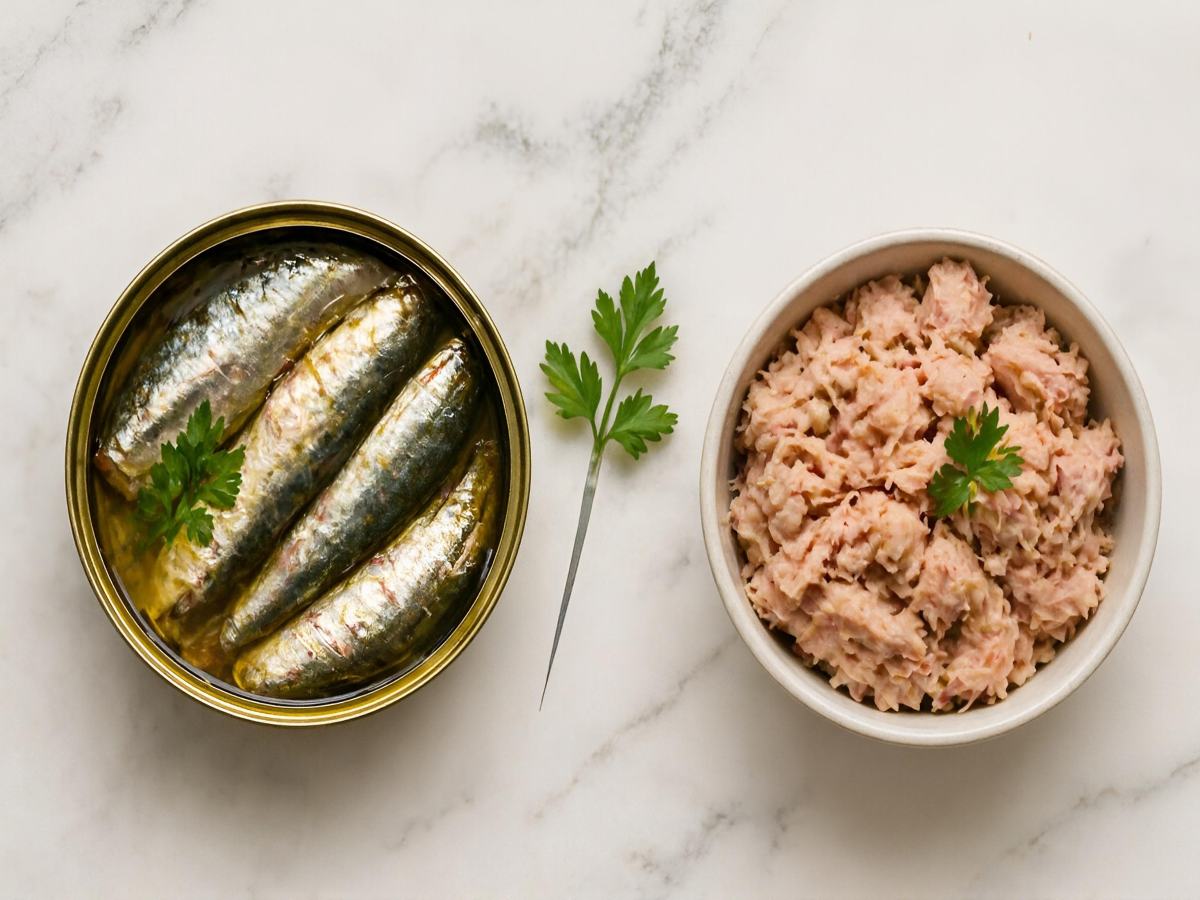
When it comes to simple, nutrient-dense seafood choices, both sardines and tuna often make they way into everyday meals.
But while they may sit side by side on the shelf… their nutritional profiles are quite different.
🐟 Small Fish… Big Nutrient Impact
Sardines are small, oily fish typically consumed whole — including the bones and skin — which makes them uniquely rich in a wide range of nutrients.
Nutrient Profile (approx. per 3.75 oz / 106g canned sardines)
• Omega-3 fatty acids: ~ 1.5-2.0 g
• Vitamin B12: ~ 8-9 mcg (300%+ DV)
• Calcium: ~ 300-350 mg (25-35% DV)
• Vitamin D: ~ 160-200 IU (20-25% DV)
• Protein: ~ 22-25 g
• Selenium: ~ 45-50 mcg (80-90% DV)
• Iron: ~ 2-3 mg (10-15% DV)
⚖️ Key Differences
When comparing sardines and tuna, a few key nutritional differences stand out. Sardines tend to provide higher levels of omega-3 fatty acids and vitamin D, along with naturally occurring calcium due to their edible bones — something tuna contains only in minimal amounts, and being richer in healthy fats, with tuna presenting a leaner option.
Another point to consider is that larger fish, such as tuna, can accumulate higher levels of naturally occurring elements like mercury over time due to their size and longer lifespan. Smaller fish like sardines are often noted in this context, as they tend to remain lower on the food chain and accumulate less.
FINAL THOUGHT 💭
This doesn’t mean tuna can’t be part of a balanced routine — it simply highlights the value of variety and mindful selection when choosing seafood.
NutriMiracles | Glow with Nature ✨
Educational content only — not medical advice. Created with AI-assisted tools.